Tatjana Meluškāne on Payments as the First Impression: How SPAYZ Sees Trust Built in Seconds

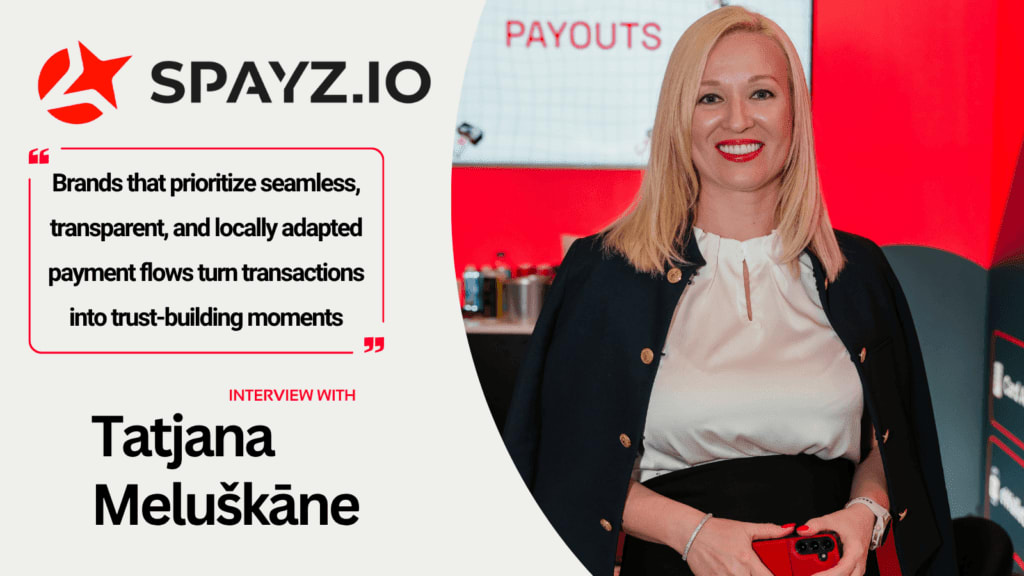
Tatjana Meluškāne, Chief Commercial Officer (CCO) at SPAYZ.io, brings over 15 years of experience across banking and fintech, with a strong track record of driving international growth and delivering commercial results. She combines strategic leadership with deep expertise in payments, acquiring, and global business development.
In this interview, Tatjana shares SPAYZ’s perspective on how payment experiences shape player trust, influence brand perception, and drive long-term loyalty in the iGaming industry—where payments are no longer just a back-office function, but a central part of the player journey.
From Spayz.io’s perspective, how quickly do players form opinions about a casino based on its payment experience?
Tatjana Meluškāne: Much faster than operators expect. Brand perception is formed during the very first deposit attempt. If the checkout feels slow, confusing, or unfamiliar, trust drops instantly. Players see payments as part of the overall brand; any friction instantly erodes trust.
A smooth and intuitive flow, signals professionalism and reliability, as payment methods continue to innovate across the iGaming industry. In today’s environment, payments are no longer backend infrastructure, they are front-facing brand touchpoints.
Which payment-related details do players seem to associate most strongly with a “trustworthy” casino brand?
Tatjana Meluškāne: Speed and predictability are key. Fast deposits are expected, but fast and transparent withdrawals are what truly build trust. Clear transaction confirmations, familiar local payment methods, visible security measures, and consistent processing times all reinforce credibility.
Players also notice small UX details, whether the payment page looks native and professional or feels redirected and fragmented. A trustworthy brand is one where payments “just work” without surprises, delays, or unexplained declines. Reliability builds confidence, and confidence drives retention.
Are there payment signals that unintentionally make an online casino feel less reliable, even if the platform itself is solid?
Tatjana Meluškāne: Absolutely. Too many redirects, unclear error messages, transaction failures, or limited local methods can create doubt. Even mismatched branding between the casino and payment page can raise suspicion. Unexplained delays are especially damaging, players may assume something is wrong, even if it is a technical or bank-related issue.
Another red flag is overcomplicated authentication flows that feel intrusive rather than protective. These signals don’t necessarily reflect the quality of the casino, but they heavily influence perception. In our latest 2026 Payments Forecast Report, we explore how gaps in local payment coverage and inconsistent user experiences are among the biggest drivers of trust breakdown in iGaming.
How do withdrawal processes, in particular, influence how players talk about and remember a casino brand?
Tatjana Meluškāne: Withdrawals are the moment of truth. Deposits are emotional; withdrawals are rational. When players request a payout, they evaluate whether the brand keeps its promises. Slow withdrawals, inconsistent timelines, or unclear checks quickly hurt reputation, while fast, transparent payouts build positive word of mouth.
In our experience, casinos that optimise withdrawal flows see measurable improvements in retention and affiliate feedback. A smooth payout process doesn’t just close a transaction, it strengthens brand loyalty.
Based on Spayz.io’s work with casinos, do player expectations around payments differ depending on market or player maturity?
Tatjana Meluškāne: Yes, significantly. In emerging markets, players prioritize local methods and familiarity. If the payment option feels foreign, conversion drops and in some cases, payment disruptions can further impact the overall experience. In mature markets, expectations are higher, instant payments, biometric authentication, and seamless wallet integration are becoming standard.
Player maturity also matters. Experienced users are more sensitive to processing times and transparency. New players focus more on simplicity and perceived safety. Successful casinos adapt their payment strategy to local markets as well as audience sophistication.
If casinos want to strengthen their brand perception through payments, what mindset shift is often needed internally?
Tatjana Meluškāne: The biggest shift is viewing payments as a brand strategy, not just an operational necessity. Payments influence acquisition, retention, compliance, and reputation. Internally, this means closer collaboration between payments, product, risk, and marketing teams. It also means investing in orchestration, data visibility, and local optimization rather than relying on a single global solution. Casinos that treat payments as a growth engine — not a cost centre — build stronger, more resilient brands.
As this conversation shows, payments can make or break brand trust in seconds. Casinos that prioritize seamless, transparent, and locally adapted payment flows turn transactions into trust-building moments and transform operational processes into a competitive advantage.