Ivan Kiselev: 500 Operators, One Secret: How to Pick the Perfect License for Your Casino

Ivan Kiselev, an iGaming licensing expert at MyGamingLicense who has guided over 500 operators through the process, knows exactly how crucial it is to start with the right foundation. When launching an online casino, you might think the most important things are your platform, marketing, and traffic. But actually, everything can fall before it even starts if you choose the wrong gambling license.
The licensing market is changing rapidly. Curaçao is losing its popularity due to new regulations causing delays and confusion. Malta is becoming increasingly challenging — expensive, complicated, and slow. Instead, newer jurisdictions like Kahnawake, Anjouan, Tobique, and Vanuatu are gaining popularity. They are rising to the top because they’re straightforward, fast, and actually deliver results.
Jurisdictions might attract you with bonuses, but what’s truly important is that the license fits your project perfectly. Even one mistake could cost you months of wasted time. You might lose about a year just dealing with compliance, spend hundreds of thousands of euros on legal services, fixing your paperwork, and fighting endless bureaucracy. Constant regulatory requests, revisions, and delays could drain your energy and motivation.
Kiselev knows the ins and outs, is familiar with all the hidden risks, when regulators would pull the plug, and where, on the flip side, new opportunities are starting to open up.
We discussed how to choose the right license for your specific project, which jurisdictions are currently effective, why many operators are moving from Curaçao and Malta, and the most common mistakes beginners make.
What are the biggest challenges and shifts you’re seeing in the gaming licensing space right now? Especially with the tightening of regulations in Malta and Curaçao.
Ivan Kiselev: Based on what I’ve seen, around 90% of operators are now going to Anjouan — mostly because it’s affordable and the rules are easy to follow. At the same time, trust in Curaçao has dropped. Ongoing delays, unclear rules, and general disorganization — it’s been a bit of a mess for the past 2–3 years.
They’re trying to fix things now, and the situation is slowly getting better, but the bad impression is still there. A lot of operators just don’t want to deal with Curaçao anymore, even if the license is technically still available.
Malta and the Isle of Man have also lost some appeal. Their licenses are expensive, complicated, and come with tough requirements — factors that made sense for the B2B space in the past, but now feel like too much for many new projects.
The licensing model is changing. These days, many operators start with an Anjouan license, and only move to a local license later, once the project grows and targets specific markets.
This approach gives more flexibility: you can launch quickly, pick up steam, and then, if needed, apply for a local B2B registration or a full local license.
Another big trend is the shift toward national regulation. More and more countries are creating their own licenses for online casinos. I’m pretty sure that soon, almost every country will have its own license, because gambling is seen as entertainment, and governments are tightening control over it.
And of course, becoming a top online casino in a specific country isn’t just a business goal anymore, it’s a matter of status. The market will continue to move toward localization.
On top of that, crypto gambling is growing fast: we’re seeing more operators focusing entirely on crypto casinos, which is definitely something to watch.
Licenses from places like Anjouan, Nevis, and Kahnawake are trending. What’s behind this shift, and how should operators evaluate them?
Ivan Kiselev: Imagine you are buying gloves. You could go with a basic polyester pair because it’s cheap and simple. But then someone offers you leather gloves with a warm lining, and they cost the same. Obviously, you’d pick the leather ones because of its better quality, more comfort, and the same price.
The same applies to licensing in Anjouan. You’re getting something affordable and straightforward — maybe not fancy, but it works well and gives solid protection. You’re not overpaying or taking on debt, just getting a practical, low-risk solution that does the job.
You might say it’s not a perfect analogy, but the point is when you’re offered the best value for your money, you go for it.
Speaking about operators and licenses, I believe that every operator should have at least one offshore license.
Why? Because it acts like insurance and gives you the flexibility to grow your business whenever you’re ready.
Picture this: you’ve got an extra $30,000 to invest in this kind of license. This isn’t just a piece of paper; it’s your ticket to operating legally, knowing your rights are protected, and having peace of mind. It also shows that your business is serious and stable.
Since the Curaçao reforms in 2024, how has your approach to helping clients changed?
Ivan Kiselev: The situation is still changing almost daily. As soon as there are updates in any country, I react right away and share the news with my team. Then our client support team quickly adapts and keeps our clients informed. We keep our finger on the pulse every day. We even have a dedicated marketing team that tracks all the latest iGaming news and changes.
If something shifts in Anjouan, we adjust right away, inform our operators, and update our recommendations as needed. And for clients who work with me directly, they already know I never offer just one option. I usually suggest two or three, tailored to their business goals. That way, they can choose the most convenient, fastest, and realistic solution.
My goal is always to help the client find the best path forward, so I only take on projects where I see real potential and room for growth. My personal approach is to act as a flexible guide throughout every step of the process. That’s especially important in an industry where the rules, license conditions, and even political or economic factors are constantly shifting and affecting regulators.
Which emerging jurisdictions do you think will be licensing hotspots in the next 12–24 months?
Ivan Kiselev: Anjouan will probably remain a strong license option. The only issue is that it’s still new. What happens if operators start scamming players or playing dirty? Could that hurt the license’s reputation? Curaçao issues licenses to everyone, and that eventually hurts their image. But still Anjuan gaming license is moving in the right direction. They improve their recognition in the B2B space, and that’s definitely a good sign.
Speaking about Nevis, I’m looking forward to seeing them enter the market. They have a big potential. Launch delays are totally normal in the industry regardless of the jurisdiction and a company. In my experience, 99% of new market enters face some kind of delays. It’s just a part of the process.
Tobique also has a promising future. They’re positioning themselves well in the market, they know how to sell their license. As a result, they are becoming more and more recognized. On top of that, they are steadily improving their license — maybe not fast, but they are moving forward step by step.
They’re not backtracking or standing still, because their team is made up of professionals doing a solid job, and that builds a lot of trust.
From your experience with 500+ operators, what’s the biggest mistake new casinos make when choosing a license?
Ivan Kiselev: One of the biggest mistakes is choosing a license that doesn’t match a company’s budget and needs, or isn’t valid in the countries where it plans to operate. Another issue is picking the wrong agent, who promises everything upfront, but later keeps asking for more money.
I see three main factors to look at: price, timeline, and the agent you will work with.
The price can turn out to be much higher than expected — it might seem cheap at first, but in the long run, the total cost is a lot more. For example, the Isle of Man license might look affordable, but it can end up being very expensive.
As for the timeline, companies often expect to obtain a license for 6 weeks, but in reality, delays are common. You might gather some extra papers, or the regulator might ask more questions, and the whole process takes longer. That’s why it’s smart to plan for more time than you think you’ll need.
Another common problem is agents who promise low prices and fast results, but things turn out very different once you’ve signed the contract.
What are the 3 things an operator should have ready before applying for a license?
Ivan Kiselev: Your platform should be at least 90% ready before you apply for a license. Ideally, it should be fully finished so you can start testing right away, but 90% is the minimum.
The second key point is having an experienced team. It’s especially important to have someone with solid licensing experience who can lead the process.
Third, you need to time your license application properly. You can apply a year in advance or just three months before launch, but the best option is to apply about 5 to 5.5 months before your planned launch date.
That’s because, on average, it takes about 3.5 months to get a license, but delays do happen. It’s better to get a license first, and then move on to setting up payment solutions and working with banks, which usually come in after the license is issued.
So in short: always leave a few extra months in your schedule just in case.
When I have a client who wants to get a license, I always ask them what jurisdiction they plan to apply for, and why they need this license. Their answers are signals to me that they don’t have enough budget.
If the client says that they have, for example, $200,000 for the whole project, I usually tell them they don’t need a license, and probably shouldn’t even start the project. I’ve seen this happen many times.
Can you share a real (or anonymized) story where your advice helped avoid a serious licensing issue?
Ivan Kiselev: I can give you the opposite example. A client reached out, I explained everything in detail and showed them how it works, and they were interested. Together we picked a license that fit their project: they originally wanted one, but we suggested a better option.
Everything went great, I sent them an offer, and they approved it. But in the end, they chose another company. Maybe the other team promised a lower price, faster setup, or something else.
Six months later, they came back and told me they were having problems, they still hadn’t gotten the license. Then I found out they hadn’t even submitted the application.
This isn’t a story about how I saved the day — it’s just an example of how things like this happen, and unfortunately, in this industry, it’s more common than it should be. You need to work with people you can trust. Yes, it might cost a bit more, but you’ll get good service and reliability.
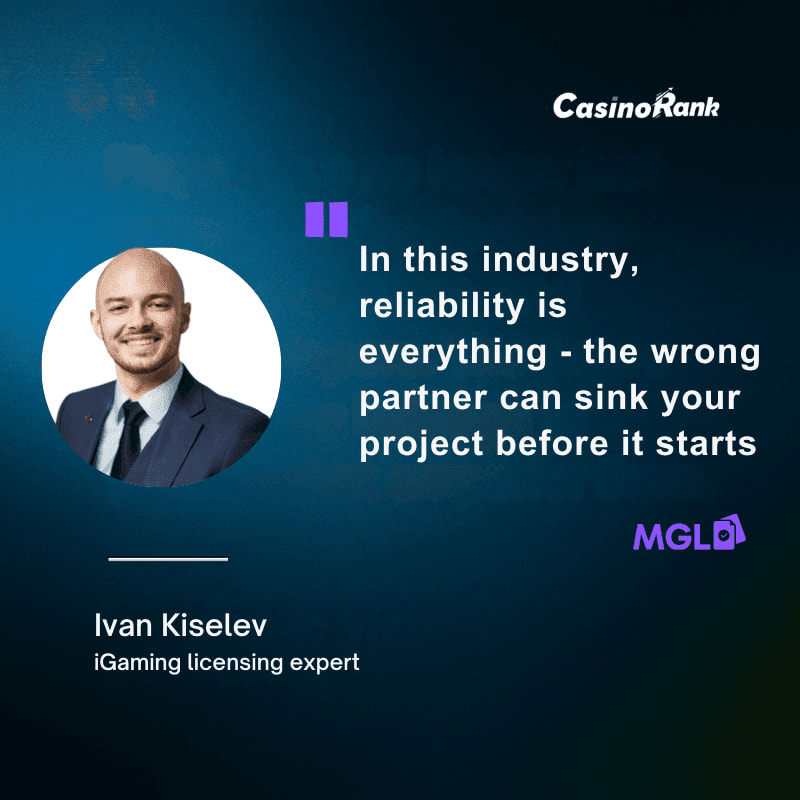
In this industry, reliability is key.
There are bad service providers out there. They promise low prices and fast results, but end up doing nothing. Reputation matters a lot, but unfortunately, these situations still happen.
Back to that client — they stayed with the agents who didn’t help them because I refused to work for free. They didn’t want to pay more, and in the end, the whole project failed.
Don’t trust those who promise to do things cheaply and make everything sound easy and fast. Always check who you’re working with — look at their track record, ask for recommendations, check their LinkedIn profiles, and see what others say about them.
When you choose reliable professionals, it might cost a bit more, but that’s exactly what can save your business later from huge fines and serious problems with regulators.
Your company focuses on licenses in Nevis, Anjouan, Tobique, Curaçao, and Kahnawake. What makes your approach stand out?
Ivan Kiselev: The core idea behind my company is simple: we do everything for the client, and if needed, we do everything instead of the client. Even the small stuff, like filling out forms. We handle that ourselves because we know exactly how to answer the questions the right way.
We take the information from passports, company documents, and project descriptions, and fill in the forms so that the answers match what the regulator expects. Many times a question might have 10 technically correct answers, but the regulator is looking for one specific response, and we know which one that is.
Beyond forms, we also prepare business plans, policies, company structure charts, and any other required documents. We help with notarization too, we explain where and how to get documents notarized, including how to do it through online notary services.
My team works with one main goal: to make things faster and easier for the client. We translate documents for free so our clients don’t have to waste time looking for translators or explaining what needs to be done. That’s one of the reasons people choose to work with us.
In short, we take on everything we can to make the process as smooth and simple as possible.The second big idea is that it’s not just about getting a license — it’s about becoming a reliable long-term partner. Getting the license is just the beginning. After that, clients often need help with payment solutions, company setup, and much more. We support them through all of that and build strong, lasting relationships based on trust.
How do you help clients choose the right license based on their specific needs?
Ivan Kiselev: Everything depends on the client’s target countries, budget, and plans. It could be a crypto casino or a fiat one — what matters is understanding the full structure, who the ultimate beneficial owner (UBO) is, where their documents come from, and other key details.
There are a lot of small factors involved, which is why I ask a lot of questions. In most cases, I can figure out which license fits best after just two or three key questions. Sometimes it takes more — maybe around 10 — to get the full picture.
Generally, a few answers are enough for me to quickly understand what the client actually needs.
Do you think automation or AI will play a bigger role in licensing soon, or will experience and personal guidance remain key?
Ivan Kiselev: In the B2B and iGaming regulation space, it’s unlikely that everything will be taken over by AI. Sure, some things can be improved or automated. But when a complex case comes up, like when a document doesn’t meet the requirements and can’t just be swapped out, the only real solution is to speak directly with the regulator and know how to handle the situation.
There’s also a lot of information that you just won’t find online — things like insider knowledge and hands-on experience, which are especially important in iGaming. And honestly, I can’t share all the details publicly.
Personal relationships play a huge role in getting a license, and that’s something AI simply can’t do. For basic cases, AI might help with part of the process, but in most situations, it’s just one piece of the puzzle. Real-world experience and strong connections are still irreplaceable.