Deborah Conte Santoro: How ReelLink Is Turning Regulation into a Competitive Advantage for Swiss Casinos

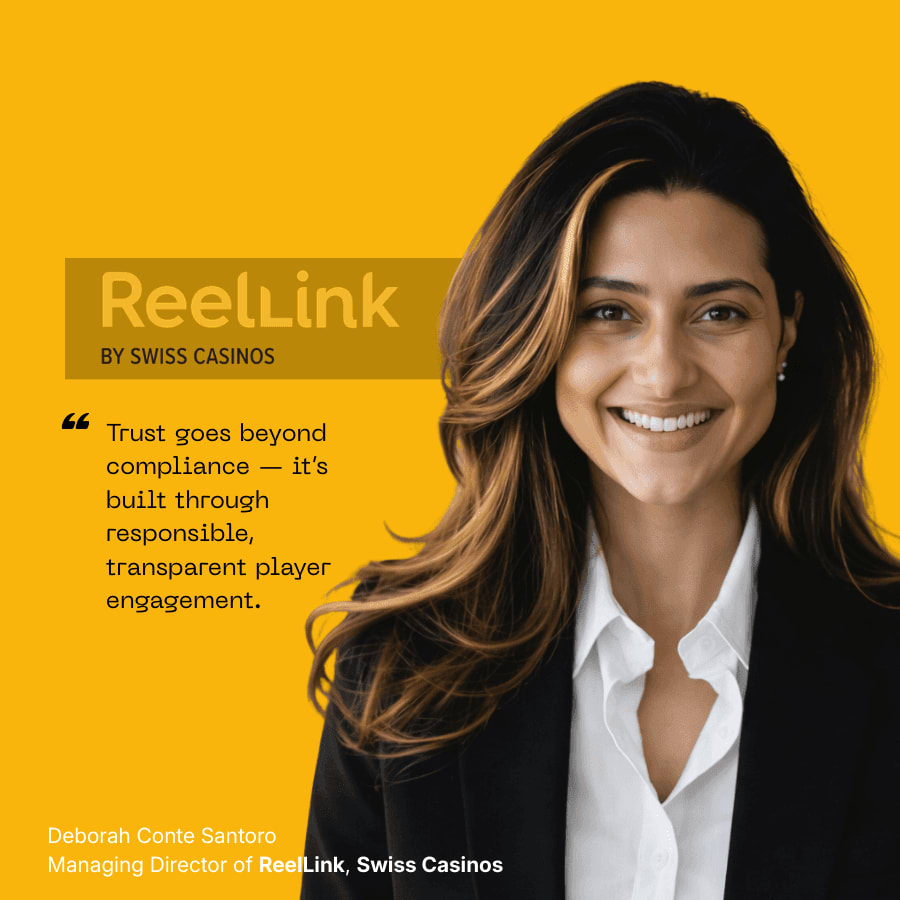
Deborah Conte Santoro, Managing Director of ReelLink, Swiss Casinos shares her perspective on how regulated operators can transform compliance into a competitive advantage.
From Switzerland’s unique exclusion system to the power of omnichannel engagement and face-to-face player interaction, she explains how ReelLink is helping licensed operators strengthen transparency, enhance player protection, and differentiate themselves from the black market, all while increasing player confidence and lifetime value.
As 2026 approaches, how will player expectations evolve for Swiss casinos in a highly regulated, trust-driven market?
Deborah: Player expectations are becoming more nuanced. Trust is no longer just about compliance; it’s about how responsibly and transparently operators engage with players across all touchpoints.
In Switzerland, this is particularly complex due to the strict player exclusion system. Rapid and long-term bans across online and land-based channels are designed to protect vulnerable players, but they can also unintentionally push some individuals toward unregulated and unsafe platforms. This creates a delicate balance between protection and retention within the regulated ecosystem.
A strong omnichannel presence plays a crucial role here. When operators can interact with players both digitally and face-to-face, it becomes much easier to identify risk early and engage in meaningful conversations around responsible gambling. Ultimately, player expectations are shifting toward a holistic protection model, where technology, regulation, and human interaction work together, especially for those most at risk.
How has “player trust” evolved in recent years, and how do regulated operators reinforce it daily?
Deborah: Today, player trust is built through consistency and continuity of experience. Players expect the same level of transparency, quality, and familiarity whether they engage online or on the casino floor.
This is where omnichannel strategy becomes essential. A seamless connection between online and land-based environments not only improves the player journey but also clearly differentiates regulated operators from illegal platforms, supported by recent regulatory news supporting player trust.
“It’s the best way to differentiate yourself from the black market, because the black market cannot copy an omnichannel experience. They don’t exist in the land-based venue. If we bring online players into our land-based casino, we can triple the lifetime of those players in the online casino.”
For a long time, the missing link was content alignment. Online players didn’t recognize “their” games or experiences when entering a physical casino. With our new product, that gap has been closed, and we see this as a major step forward in strengthening daily trust and long-term loyalty.
Regulation can be demanding, but it can also elevate quality. How do you view the relationship between strict rules and a positive player experience?
Deborah: Very simply: regulation should be turned into a competitive advantage.
We have always viewed regulation as a tool that improves quality rather than limits creativity. Strict rules force operators to think more clearly, design better systems, and act more responsibly. A deep understanding of regulation becomes a strategic asset.
This mindset is precisely why we were able to deploy ReelLink in such a short timeframe. When compliance is embedded into the product from the start, innovation accelerates instead of slowing down.
With personalisation growing globally, how can Swiss Casinos apply it in a regulated market without compromising player safety?
Deborah: In Switzerland’s tightly regulated market, personalisation must be contextual, responsible, and compliant. Swiss Casinos embraced these constraints as an opportunity rather than a limitation.
With ReelLink, personalisation doesn’t mean unchecked incentives or risky behavioral targeting. Instead, it focuses on content alignment, recognition, and continuity between online and land-based play, always within regulatory boundaries.
This approach creates a seamless experience that increases engagement while maintaining player protection. It also clearly differentiates licensed operators from unregulated platforms. By bringing online players into physical venues, operators can significantly increase player lifetime value while maintaining visibility and oversight.
Technology continues to improve compliance tools, monitoring, and player protection. Which areas do you see benefiting the most from innovation in 2026?
Deborah: Player protection will benefit the most. Switzerland’s strict, cross-channel exclusion system is effective but can have unintended consequences if not paired with direct engagement.
ReelLink’s omnichannel approach enables operators to maintain contact with players, even in sensitive situations. Face-to-face interactions combined with digital monitoring make it easier to identify risk, intervene early, and support responsible gambling, rather than losing players entirely to the black market.
Technology that enables connection, transparency, and dialogue will define the next wave of responsible gaming innovation.
Operating in a mature market requires long-term thinking. How do operators stay relevant while preserving stability and responsible gaming standards?
Deborah: Long-term relevance comes from integrating technology, regulation, and player protection into a single strategy. Operators that treat compliance as a foundation for innovation are better positioned to evolve sustainably.
ReelLink demonstrates that it’s possible to enhance player engagement while strengthening oversight and responsibility. This balance is essential in mature markets, where growth depends more on trust, retention, and quality than rapid expansion.
Looking ahead, what guiding principles will define the most trusted and successful regulated casino operators in 2026?
Deborah: The most trusted operators will be those who can deliver immersive, digitally familiar experiences while attracting digital-first players back onto the casino floor.
As the global gambling market is expected to nearly double by 2033, that growth will intensify competition and regulatory expectations, making scalable, compliant infrastructure essential.
This requires seamless integration with existing casino systems. Platforms must plug directly into any Casino Management System (CMS), ensuring full compatibility with player tracking, accounting, and compliance protocols, while supporting standard peripherals such as LEDs, bill validators, and TITO systems.
Equally important is full operational transparency. Operators need real-time access to logs, performance data, and system status through a centralized casino portal. Content updates should be instant, machine-level diagnostics accessible directly on the floor, and all activities fully traceable.
That is exactly how ReelLink works.