Martin Zarian of Factory 39, Beyond the “Bonus Crack” — Scaling Global iGaming Brands

Martin Zarian, Co-Founder and Design Lead at Factory 39, works at the intersection of brand strategy, market positioning, and growth for companies operating in complex and highly competitive industries. Over the past decade, he has helped organizations transform strong products into distinctive brands capable of standing out in crowded markets.
In an industry addicted to the short-term high of “Bonus Crack” marketing, Zarian argues that true differentiation is dead unless you build a brand that lives in the player’s mind. In this CasinoRank interview, he explores the shift from “growth at any cost” to Institutional Integrity, revealing how iGaming brands can achieve global scale by prioritizing coherence over consistency and brand salience over generic acquisition.
How has your background shaped how you assess branding challenges in iGaming?
Martin Zarian: Working across highly regulated, competitive industries taught me one thing: the more commoditised the market, the more critical brand becomes. In these environments, traditional differentiation is dead. There’s no real USP anymore. Any iGaming and online casino mechanics you launch will be copied by global competitors within weeks, whether it’s new bonus models; and often, even at half the price. The “blue ocean” is gone.
iGaming is a textbook example. Products are nearly identical, features are easy to replicate, and differentiation through the offering alone is almost impossible to defend. Yet most operators still pour the majority of their budget into what I call the “Bonus Crack” addiction: short-term performance marketing, affiliate deals, and massive CPAs. It’s basically a sugar rush.
The flaw is obvious. This strategy attracts bonus hunters, players with zero loyalty who jump to the next casino the moment the free spins run out. The result is high churn and a constant need to outspend competitors just to keep the player base flat. This is where the 95–5 rule becomes critical. Only about 5% of your potential customers are ready to buy right now. The other 95% aren’t looking yet—but when they are, your brand needs to be the first thing that comes to mind. The exact percentage varies by market and product, but the principle holds.
In so-called “sin” industries this is even harder due to regulatory friction. Ad bans and gambling restrictions push most operators toward generic “Bet $5, Get $50” banners that build zero mental availability. When players finally decide to open a new account, they don’t think of a brand—they Google “best deposit bonus.”
Most iGaming companies are invisible to that 95% because they’ve never invested in long-term brand awareness. The few that broke the pattern understood something fundamental: they are entertainment brands, not gambling utilities. This challenge isn’t unique to iGaming. I see the same trap across B2B and other regulated industries.
The opportunity is massive for whoever breaks the pattern first.
iGaming now sits at the intersection of regulation, institutional capital, and global expansion. From a branding perspective, what new responsibilities does this stage of industry maturity place on operators and suppliers?
Martin Zarian: iGaming is no longer a game of “growth at any cost.” It’s a game of Institutional Integrity. The new wave of industry consolidations is clear representation of how institutional capital is reshaping the competitive landscape. If you’re playing at the intersection of global capital and heavy regulation, your brand has three new, non-negotiable responsibilities.
Stop Buying Customers, Start Building Salience
Most operators are just vending machines for bonuses instead of building long-term player loyalty around their brands. That’s a race to the bottom where the only winner is the customer’s wallet. In a mature market, build a brand players actually want to stay connected with.
If your brand is just a “Deposit Match” in a different color, you don’t have a brand, you have a margin problem. You need to build something that lives in the player’s head when the app is closed. That requires “fame” and “fluency,” not just another 10% reload.
Coherence Over Consistency
The old school thought branding was just putting the same logo on every shirt from London to Lagos. That’s not it.
A mature global brand needs a Dynamic System. You have a responsibility to be coherent, not identical. Your brand has to be “Elastic” enough to satisfy a stiff-collared regulator in a boardroom while still vibrating with enough energy to move a player on a Sunday afternoon. It’s the same soul, just wearing different clothes for different markets.
Strategy is a Choice, Not a License
Having a license isn’t a strategy; it’s the table stakes. Strategy is about the brutal art of saying “no.”
Maturity forces you to pick a lane. Are you the high-trust, safe-bet “Institution”, or are you the sharp, frictionless “Disruptor”?
You cannot be both. If your brand doesn’t scream a specific “where to play” and “how to win” choice, you are just a commodity waiting to be priced out of the market. Institutional capital doesn’t invest in generic brands; it invests in a clear, defensible theory of advantage.
Performance marketing has long dominated iGaming growth strategies. Where do you see tensions emerging between short-term acquisition goals and the need for coherent, long-term brand positioning?
Martin Zarian: Look, if you’re addicted to the “click-to-deposit” pipe, you’re essentially running a glorified discount store. Every time you scream “FREE BET” in a banner ad, you aren’t building a business; you’re devaluing the asset. You’re telling the market your 15 years of heritage is worth exactly the price of a ten-pound bonus. It’s a tactical adrenaline shot that leaves the brand’s heart weaker every time the high wears off.
The math is brutal but simple: if you don’t pivot at least 60% of that spend toward long-term positioning, you’ll never own the customer. You’ll just keep renting them at ever-increasing rates. Brand equity is the only real flywheel in this game. When the brand is strong, the performance tactics actually work better—the “cost per click” drops because the name on the screen already carries weight, trust, and a bit of that old-school swagger.
This tension gets even more dangerous when you cross borders. You cannot “performance” your way into a new culture. Acquisition is cold, transactional, and, honestly, a bit rude. If your acquisition team is screaming for conversions in a market that is currently demanding trust and local relevance, you’re dead on arrival. You end up as a faceless global entity that no one likes, governed by a rigid identity that snaps the moment a local regulator looks at it sideways.
As expectations from regulators, partners, and investors continue to rise, how should iGaming companies ensure their brand strategy is reflected in real operational behaviour rather than just external messaging?
Martin Zarian: If the brand isn’t an operating system, it’s just a mask. In a mature market, regulators and investors don’t look at your ads; they look at your architecture.
Strategy as an OS means your brand values are the “if/then” statements for every internal decision. If you claim to be about “Hard work and being nice,” that has to be the filter for your product roadmap, your compliance hurdles, and your HR policies. You don’t “message” trust; you bake it into the friction of the user experience.
If your strategy doesn’t occasionally force you to make a hard choice—like killing a profitable but “shady” feature—then you don’t have a strategy; you have a slogan. Real operational behavior is the only thing that closes the “Integrity Gap” that regulators love to exploit.
Factory 39 recently led the rebrand of SiGMA, one of the most visible platforms in the global iGaming ecosystem. From an industry perspective, what does this shift say about how iGaming is positioning itself as it seeks broader legitimacy and influence?
Martin Zarian: The SiGMA rebrand was the industry’s “coming of age” moment. When we started, the business was expanding globally, but the brand was hitting a growth ceiling. It was fragmented, inconsistent, and, frankly, too small for its own ambitions.
The shift was about moving from an “Event Company” to a “Global iGaming Authority.” We moved away from a rigid, top-down identity in favor of a “Global-Local” architecture. This allowed SiGMA to put the location—whether it’s Brazil, Dubai, Manila, or the new, iconic SiGMA Rome—in the front seat, while the SiGMA master brand provided the institutional “seal of approval” across its global events.
This suggests the industry is moving toward Sophisticated Scalability. iGaming isn’t content being a niche sector anymore; it wants a seat at the big table alongside FinTech and SaaS. By simplifying the visual language and building an identity system that can “morph” to respect local cultures while maintaining a global soul, SiGMA signaled that it is ready for professional legitimacy.
For iGaming companies reassessing their brand at this stage of market maturity, what is one strategic principle they should prioritise to remain credible and relevant over the long term?
Martin Zarian: Coherence over Consistency. The old-school rule was to keep everything identical. That’s a death sentence for a global brand in a regulated market.
Maturity requires a Dynamic System that allows you to be “same-same but different.” You need an elastic identity that satisfies a stiff-collared regulator in a boardroom while still vibrating with enough energy to move a player on a Sunday afternoon.
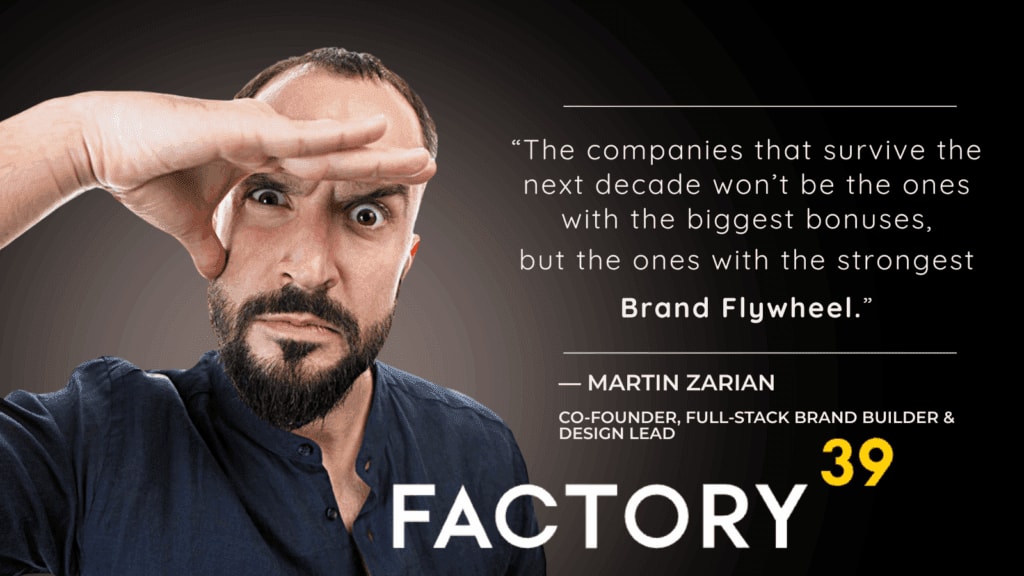
Stop trying to be “the casino for everyone.” Pick your lane, the “Institutional Safe-Bet” or the “Frictionless Disruptor”—and then build a brand architecture that can survive global expansion without losing its soul. Credibility comes from the market seeing that your external promise and your internal reality are the exact same thing. The companies that survive the next decade won’t be the ones with the biggest bonuses; they’ll be the ones with the strongest Brand Flywheel.